Solutions: 5 - Identity is an integer
Reference solutions for the exercises in 05_identity_is_an_integer.md. Try the exercises first.
Exercise 1 - Build the deck
#![allow(unused)]
fn main() {
fn new_deck() -> (Vec<u8>, Vec<u8>, Vec<u8>) {
    let mut suits = Vec::with_capacity(52);
    let mut ranks = Vec::with_capacity(52);
    let mut locations = Vec::with_capacity(52);
    for s in 0..4u8 {
        for r in 0..13u8 {
            suits.push(s);
            ranks.push(r);
            locations.push(0); // 0 = in the deck
        }
    }
    (suits, ranks, locations)
}
}
The order of insertion sets the index-to-card mapping. Spades fill indices 0-12, hearts 13-25, and so on. The Ace of Spades is at index 0; the King of Clubs at index 51.
Vec::with_capacity(52) is a small but honest gesture: the size is known up front, so we ask for exactly that much memory. No reallocation, no surprise. This is constant-quantity behaviour - node 27 will explain why it matters at a million.
Exercise 2 - Print a card
#![allow(unused)]
fn main() {
const SUIT_CHARS: [&str; 4] = ["♠", "♥", "♦", "♣"];
const RANK_CHARS: [&str; 13] = [
    "A", "2", "3", "4", "5", "6", "7", "8", "9", "10", "J", "Q", "K",
];

fn card_to_string(suit: u8, rank: u8) -> String {
    format!("{}{}", RANK_CHARS[rank as usize], SUIT_CHARS[suit as usize])
}

fn print_deck(suits: &[u8], ranks: &[u8]) {
    for i in 0..suits.len() {
        println!("{:>2}: {}", i, card_to_string(suits[i], ranks[i]));
    }
}
}
The as usize casts are because Vec and array indexing want usize. Choose u8 for the columns because we’re never going to have 256 suits or ranks; the smaller width saves memory and keeps more of the deck in L1.
Exercise 3 - Shuffle
A tiny LCG, then Fisher-Yates over the index order:
#![allow(unused)]
fn main() {
// A Linear Congruential Generator. Not cryptographic. Fine for shuffling cards.
fn rand(state: &mut u64) -> u64 {
    *state = state
        .wrapping_mul(6364136223846793005)
        .wrapping_add(1442695040888963407);
    *state >> 32
}

fn shuffle(n: usize, seed: u64) -> Vec<usize> {
    let mut order: Vec<usize> = (0..n).collect();
    let mut state = seed;
    for i in (1..n).rev() {
        let j = (rand(&mut state) as usize) % (i + 1);
        order.swap(i, j);
    }
    order
}

fn print_deck_shuffled(suits: &[u8], ranks: &[u8], order: &[usize]) {
    for &i in order {
        println!("{}", card_to_string(suits[i], ranks[i]));
    }
}
}
The print function takes suits, ranks, and order as &[u8] and &[usize] slices - none of them are mutated. The cards stay where they are. Only the traversal changes.
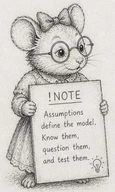
|
Note - A real shuffle wants a stronger RNG; for fifty-two cards an LCG is fine. The exercise is about the indices, not the entropy. When you have an excuse to use a real RNG, the from-scratch test (node 40) applies: write the LCG version first, then read whatever crate you might reach for, and pick consciously. |
Exercises 4-8
Same shape. The pattern is:
- Whatever query you want is a
forloop over an index range, asking the columns at each index. - Whatever rearrangement you want is a permutation of the order vector, leaving the columns unchanged.
- A “move” - dealing, discarding - is a write to
locations[i], never a copy of the card.
If you find yourself constructing a Card struct to make exercise 8 cleaner, stop. The four hands together are simply a Vec<u8> of length 52 (the existing locations array) with values 0..5. Printing each hand is cards_held_by(&locations, p) for p in 1..=4.
Exercises 9-10
Both are bridges into the next sections.
- Exercise 9 (drop the index) is a preview of nodes 6 (row is a tuple) and the natural-key idea named in the strong-form note above. The (suit, rank) pair is the card; you don’t need an integer to refer to it. But moving it back to the deck is now harder, because you’ve lost the slot reference.
- Exercise 10 (the sort hazard) is the bug that motivates §9 - Sort breaks indices, which in turn motivates §10 - Stable IDs and generations. The bug shows up the moment you sort the data arrays themselves rather than the order vector. You need a stable name for a card that survives reordering - and that name is what node 10 introduces.